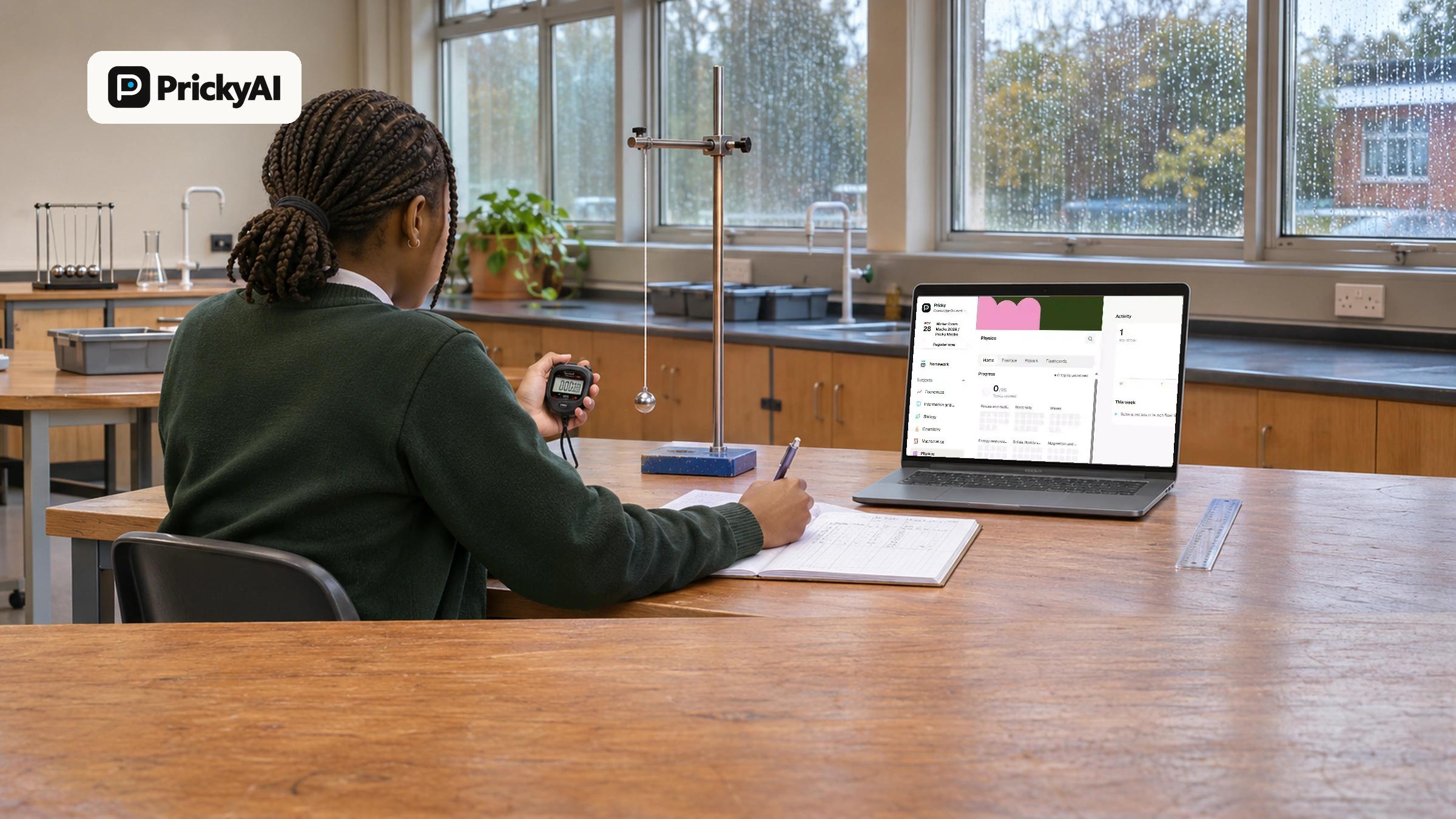


Start your Cambridge IGCSE February/March 2027 plan with your own exam timetable. Count back from the first paper and list your subjects and components. Cambridge publishes March-series information for centres in India and Romania. Confirm the dates and local sessions for your entry with your school. Cambridge March series timetable and entry information
Days 90 to 61: diagnose the gaps
List the current syllabus topics for each subject and attempt a mixed set of questions under light time pressure. Mark it with the matching mark scheme. Record specific errors, such as choosing the wrong graph axis or using the diameter where the formula needs the radius. Use those errors to decide which topics need the next practice session.
Days 60 to 31: practise by component
Alternate short topical practice with mixed questions. After marking, redo missed questions without the solution and try another that requires the same skill. Reserve current-format papers for later mocks. The component code and exam year help you choose comparable material. Match papers to the correct mark scheme
| Subject | Practice task |
|---|---|
| Mathematics 0580 | Practise Extended Paper 2 without a calculator. Paper 2 and calculator Paper 4 each contribute 50% under the 2025–2027 syllabus. |
| Physics 0625 | Write a complete practical plan and calculate a gradient. |
| Chemistry 0620 | Set out a mole calculation and use the qualitative analysis sheet to interpret test observations. |
| Biology 0610 | Describe a trend and explain its mechanism in separate answers. |
| ICT 0417 | Rehearse the practical workflow using the software available at your centre. |
| Economics 0455 | Link a diagram to the scenario and explain why the outcome might vary. |
Maths Paper 2 · Physics Paper 6 · Chemistry ion tests · Biology Paper 4
Days 30 to 1: sit full papers and review
Set the official duration and use the equipment permitted for that paper. Compare the marks you earned with the marks available by question. Revisit precision and units if you lose marks near the end of calculations. Adjust your pacing if you leave a section blank. Compare historical thresholds only when the components and series match. Read the Cambridge thresholds
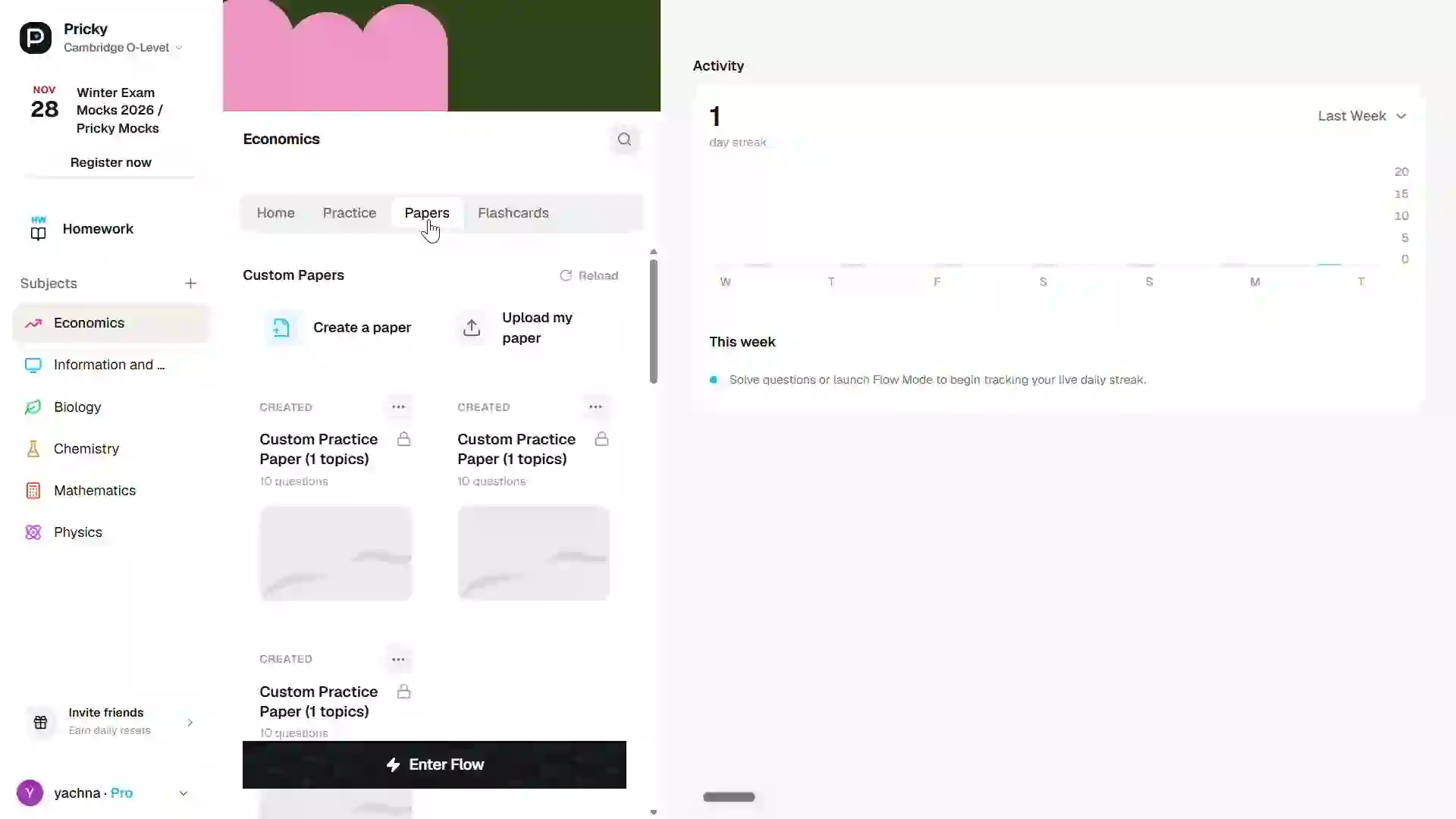
Build a practice paper in PrickyAI
Choose questions for a practice session and work through the paper in the app.
Build a week you can repeat
For your next priority subject, set one recall session, two focused practice sessions and one mixed or timed session. Leave time for marking and a short reattempt later in the week. Rotate subjects as exams approach, giving more time to the nearest papers and the gaps you keep finding. Space your revision sessions
Turn the March 2027 timetable into a plan by paper
Build the plan around individual components. In the published March timetable, Extended Maths 0580/22 is on Wednesday 3 February, while 0580/42 is on Monday 15 February. Physics 0625/62 is on Thursday 4 February and Extended theory 0625/42 is on Friday 12 February. These are selected examples from the published timetable. Check your entry and local session with your centre, particularly when arranging arrival times or practical examinations. Cambridge March 2027 final timetable
For a student taking those four papers, a sensible sequence is to finish a Maths Paper 2 mock and a Physics practical-skills mock early enough to repeat the questions that caused trouble. After the first two exams, change the daily balance towards Physics theory and Maths calculator practice. Keep other subjects on the calendar so an exam-free day for Maths does not become an exam-free day for everything.
Decide what deserves a longer session
Start with the nearest paper and its largest recurring gaps. Suppose a Maths mock shows three errors from working with fractions and one from a forgotten bearing convention. Give fractions a session with new questions and use a short bearings check on a separate day. If Physics graphs repeatedly cost marks, set aside enough time to draw them on paper and mark the scale, plotting and gradient separately. A five-minute recap can refresh a formula. A full planning question needs time to write and check a method.
Match revision to the assessment format
Maths 0580. Keep a short non-calculator routine for fractions, signs and exact answers. In the calculator paper, use the permitted equipment, show the setup and follow the requested precision. Practise both formats from the relevant syllabus. A correct result obtained with a calculator tells you little about whether you can reproduce the same steps by hand.
Physics, Chemistry and Biology. Give the theory and practical components different sessions. A theory session can cover calculations and causal explanations. A practical session can cover variables, data and observation language. If your school has entered you for Paper 5, use your school's supervised practical sessions as well as written planning practice. Confirm the route in the syllabus and with your centre.
ICT 0417. Separate software practice from theory. For a practical task, produce the required evidence and save the files in the format specified by the question. For theory, practise explaining a reason or risk in the given scenario. Check which syllabus applies to your exam year. Cambridge ICT 0417 syllabus and resources
Economics 0455. Use the 2027–2029 syllabus and its specimen materials for a timed mock. From 2027, Paper 1 has 40 multiple-choice questions in 60 minutes and Paper 2 has 80 marks in two hours. The structured paper includes one compulsory question and a choice in Section B. Practise linking a diagram or data value to the question before deciding which side of an argument is stronger. Cambridge Economics 0455 syllabus, assessment overview
A weekly timetable you can adapt around school
| When | Session | What to keep afterwards |
|---|---|---|
| Monday | 25 minutes on the weakest skill for the next exam | One corrected example and a similar question to retry |
| Tuesday | 30 minutes on a different subject or component | The exact command word or method you missed |
| Wednesday | 15 minutes of recall and one short mixed set | An answer written without notes |
| Thursday | 35 minutes on a timed section | Marks by question and one change to your pacing |
| Friday | Mark and redo the first incorrect question from each session | A short list for next week |
| Weekend | Sit a full paper when you have a clear block of time | Raw marks, full component code and marking notes |
Move the full paper to a day when you can finish and review it. If you only have 25 minutes, do a timed section with a fixed stopping point and mark it that day. The following week, retest the same skill in a fresh question before deciding how much study time it still needs.
Set up the next seven days in PrickyAI
Use PrickyAI to practise the subject of your next paper. The product demo shows how to add an exam date and select topics. Use your centre's confirmed date, then choose a short practice set that reflects the gaps from your latest mock. Build a mixed paper when you need to test whether you can choose methods without a topic cue.
At the end of the week, review the mistakes alongside the paper and its mark scheme. Choose one or two that would change the next mock, such as reading both axes before plotting or answering an explanation with a complete cause-and-effect chain. Write those checks at the top of your plan for the next timed session. PrickyAI exam planning and practice demos